Five Phasal Gods
五行神
Mythology
Five Elemental Gods
Gōumáng
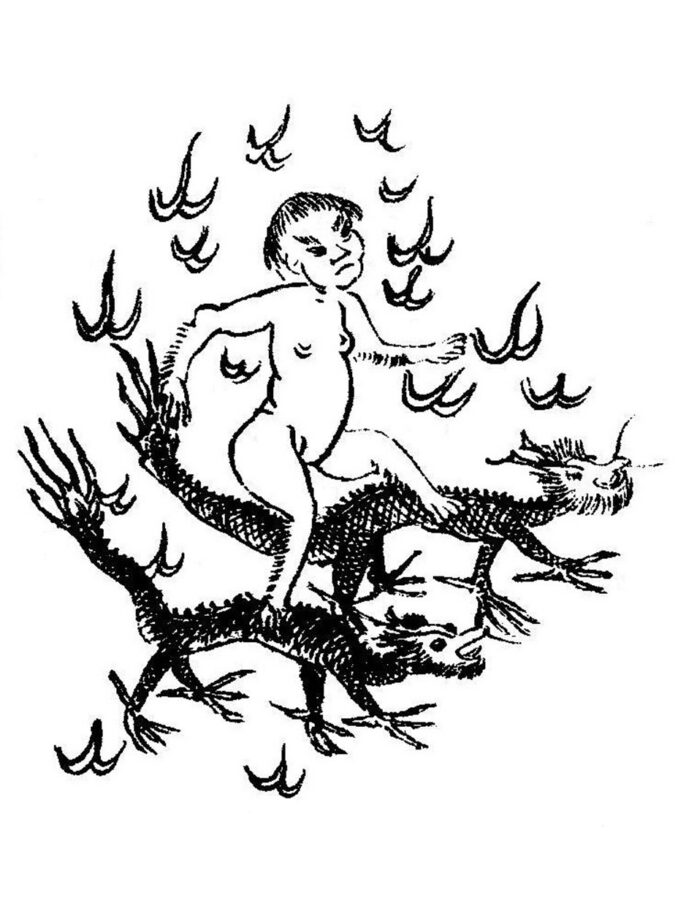
Eastern God of Wood, Spring, and Green Essence. His associated emperor is Tàihào, and his beast is Azure Dragon.
Zhùróng
Southern God of Fire, Summer, and Red Essence. His associated emperor is Yándì, and his beast is Vermilion Bird.
Hòutǔ
Central God of Earth, and Yellow Essence. Her associated emperor is Huángdì, and her beast is Yellow Dragon.
Rùshōu
Western God of Metal, Autumn, and White Essence. His associated emperor is Shǎohào, and his beast is White Tiger.
Xuánmíng
Northern God of Water, Winter, and Black Essence. His associated emperor is Zhuānxū, and his beast is Black Tortoise.
Literature
Pre-Qin and Han – Histories. Spring and Autumn Annuals – Zuǒ Commentary, 29th year of Duke Zhāo
先秦两汉·史书《春秋左传·昭公二十九年》
Thus, there were officials assigned to the Five Phases, known as the Five Officals. They were granted hereditary clan names, enfeoffed as High Nobles, and honored through sacrificial rites as revered deities.They were venerated together with the gods of soil and grain with highest respect and devotion.
The Earth Official is Gōumáng, the Fire Official is Zhùróng, the Metal Official is Rùshōu, the Water Official is Xuánmíng, and the Earth Official is Hòutǔ.
“故有五行之官,是谓五官。实列受氏姓,封为上公,祀为贵神。社稷五祀,是尊是奉。木正曰句芒,火正曰祝融,金正曰蓐收,水正曰玄冥,土正曰后土。”
Pre-Qin and Han – Histories. The Book of Han – Biography of Yángxióng, Part 1
先秦两汉·史书《汉书·扬雄传上》
遵逝宓归来,以函夏之大汉兮,彼曾何足与比功?建乾坤之贞兆兮,将悉总之以群龙。丽钩芒与骖蓐收兮,服玄冥及祝融。敦众神使式道兮,奋六经以摅颂。隃于穆之缉熙兮,过清庙之雝雝;轶五帝之遐迹兮,蹑三皇之高踪。既发轫于平盈兮,谁谓路远而不能从?
Pre-Qin and Han – Confucianism. School Sayings of Confucius – Five Emperors
先秦两汉·儒家《孔子家语·五帝》
Jì Kāngzǐ asked Confucius: “I have long heard of the names of the Five Emperors, but I do not know their true nature. May I ask what is meant by the Five Emperors?”
Confucius replied: “In the past, I heard from Laozi that: ‘Heaven has five phases; wood, fire, metal, water, and earth. These take turns to govern the seasons and generate life, thus giving rise to all things. Their divine aspects are called the Five Emperors.’
In ancient times, when kings changed dynasties, they also changed their titles, modelling themselves after the five phases. These five phases take turns ruling in succession, with each generating the next; this pattern reflects their deeper meaning.
Thus, enlightened kings, upon death, were each associated with one of the five phases. Therefore, Tàihào is associated with wood, Yándì with fire, Huángdì with earth, Shǎohào with metal, and Zhuānxù with water.
季康子问于孔子曰:“旧闻五帝之名,而不知其实,请问何谓五帝?”
孔子曰:“昔丘也闻诸老聃曰:‘天有五行,木、火、金、水、土,分时化育,以成万物,其神谓之五帝。’古之王者,易代而改号,取法五行,五行更王,终始相生,亦象其义。故其为明王者,而死配五行。是以太皞配木,炎帝配火,黄帝配土,少皞配金,颛顼配水。”
Jì Kāngzǐ asked: “What was the nature of wood at the beginning, in the time of Tàihào clan?”
Confucius replied: “The Five Phases operate in sequence, and they begin with wood. Wood corresponds to the East, and it is from the East that all things first arise. Therefore, the ancient kings followed this principle and were the first to rule the world by the virtue of wood. Those who came after goverened with the phase that was generated by the previous, passing it down in succession.”
康子曰:“太皞氏其始之木何如?”
孔子曰:“五行用事,先起于木。木、东方。万物之初皆出焉。是故王者则之,而首以木德王天下。其次则以所生之行、转相承也。”
Jì Kāngzǐ asked: “I have heard that Gōumáng is the Wood Minister, Zhùróng the Fire Minister, Rùshōu the Metal Minister, Xuánmíng the Water Minister, and Hòutǔ the Earth Minister. These are the lords of the Five Phases and do not interfere with each other. Then why are some called Emperors?”
Confucius replied: “The five ministers are the official titles of the Five Phasal offices. When the Five Phases assist in completing the work of Shàngdì, they are then honored with the title Five Emperors, as seen in the case of those associated with Tàihào. They are also called Emperors because that is the name of their position.
In ancient times, the son of Shǎohào had four uncles; Zhòng, Gāi, Xiū, and Xī. They were skilled in the domains of metal, wood, and water. Zhòng became Gōumáng, Gāi became Rùshōu, and Xiū and Xī together served as Xuánmíng. The son of Zhuānxù, named Lí, became Zhùróng. The son of Gònggōng, named Gōulóng, became Hòutǔ.
These five figures each used their skills to serve in official positions. While alive, they were high ministers. After death, they were revered as noble deities. They are separately honored as the Five Sacrifical Deities, but not as considered equivalent to the Emperors.
康子曰:“吾闻勾芒为木正,祝融为火正,蓐收为金正,玄冥为水正,后土为土正。此则五行之主而不乱。称曰帝者何也?”
夫子曰:“凡五正者,五行之官名。五行佐成上帝,而称五帝,太皞之属配焉。亦云帝,从其号。昔少皞氏之子有四叔,曰重,曰该,曰修,曰熙。实能金木及水,使重为勾芒,该为蓐收,修及熙为玄冥。颛顼氏之子曰黎,为祝融。龚工氏之子曰勾龙,为后土。此五者各以其所能业为官职,生为上公,死为贵神,别称五祀,不得同帝。”
Jì Kāngzǐ asked: “If it is as you say, that the emperors and kings changed their titles according to the virtue of each of the Five Phases, then what do they each govern when they transform from one to another?
Confucius replied: “What each dynasty valued followed the virtue by which it ruled. The Xià dynasty ruled by the virtue of Metal, so they honored the color black. In major ceremonies, they collected taxes at dusk, rode black horses to war, and used black animals for sacrifices. The Yīn (Shāng) dynasty ruled by the virtual of Water, so they honored the color white. In major ceremonies, they collected taxes at noon, rode white horses to war, and used white animals for sacrifices. The Zhōu dynasty ruled by the virtue of Wood, so they honored the color red. In major ceremonies, they collected taxes at sunrise, rode red horses, and used red animals for sacrifices. These are the reasons why the three dynasties differed from one another.”
康子曰:“如此之言,帝王改号,于五行之德,各所统。则其所以相变者,皆主何事?”
孔子曰:“所尚则各从其所王之德次焉。夏后氏以金德王而尚黑,大事敛用昏,戎事乘骊,牲用玄。殷人以水德,尚白,大事敛用日中,戎事乘翰,牲用白。周人以木德王,尚赤,大事敛用日出,戎事乘騵,牲用騂。此三代之所以不同。”
Jì Kāngzǐ asked: “What colors did the two emperors, Táng (Yáo), and Yú (Shùn), favor?”
Confucius replied: “Yáo ruled with the virtue of Fire, and his favored color was yellow. Shùn ruled with the virtue of Earth, and his favored color was azure.
康子曰:“唐、虞二帝,其所尚者何色?”
孔子曰:“尧以火德王,色尚黄。舜以土德王,色尚青。”
Jì Kāngzǐ asked: “Why is it that the rulers of the Táotáng, Yǒuyú, Xià, Yīn (Shāng), and Zhōu dynasties could not be paired with the Five Emperors? Is it because their virtue did not match that of the ancient times? Or is it because there was some limit?”
Confucius replied: “In ancient times, there are many who skillfully managed flood control, land cultivation, and the sowing of grains. But only Gōulóng (later known as Hòutǔ) received offerings as the spirit of the land, and was honored as the God of Grain, Jì. He has been worshipped across dynasties without change, and none dared add others alongside him. This clearly shows that not all are fit to be his equal. Therefore, from Tàihào down to Zhuānxū, though more than five kings ruled in accordance with the Five Phases, only those five were paired with the Five Emperors. Their virtue was exceptional and could not be matched or increased.”
康子曰:“陶唐、有虞、夏后、殷、周独不得配五帝,意者德不及上古耶?将有限乎?”
孔子曰:“古之平治水土及播殖百谷者众矣,唯勾龙兼食于社,而弃为稷神,易代奉之,无敢益者,明不可与等。故自太皞以降,逮于颛顼,其应五行而王,数非徒五,而配五帝,是其德不可以多也。”
Song. Book of Jiānmíng, Volume 1
宋《兼明书·卷一》
Míng said: “The God of Wood is Gōumáng, the God of Fire is Zhùróng, the God of Earth is Hòutǔ, the God of Metal is Rùshōu, and the God of Water is Xuánmíng. Among them, only the God of Earth is called ‘Hòu’ (lord or ruler). ‘Hòu’ signifies a sovereign, as the Earth occupies the central position and governs the four phases. Therefore, it is called ‘lord’.”
Someone asked: “According to this, Hòutǔ is the God of the Five Phases. In the Han dynasty, a temple for Hòutǔ was established at Fényáng. Which god was worshiped there?”
The reply was: “Before the Three Dynasties, there was no such ritual. It was a system created during a particular period. The sacrifice likely honored the God of Earth in a broad sense, just like the Huángdìzhī (Sovereign Earth Deity) mentioned in the Monthly Ordinances (Yuèlíng).”
明曰:「木神曰勾芒,火神曰祝融,土神曰后土,金神曰蓐收,水神曰玄冥。土神独称后者,后,君也,位居中,统领四行,故称君也。」或问曰:「据此,后土是五行之神,汉代立后土祠于汾阳,祀何神也?」答曰:「三代已前无此礼,盖出一时之制耳。其祀当广祀地神,即如《月令》所祀皇地祗者也。」